
Google Ads helps businesses reach people based on what they search for. When someone searches for a problem or service, your ad can appear when it matches their search intent.
However, many small businesses waste money on clicks from people who are unlikely to buy. At SlamStop, we’ve seen this happen across many accounts before improving their targeting.
Better results come from understanding what people search for and why they search for it. This guide explains how Google Ads works and how the auction chooses which ads appear. You’ll also learn what affects Quality Score, and which ad formats can support your business goals.
How Google Ads Works: Matching Google Ads Campaigns to Your Target Audience
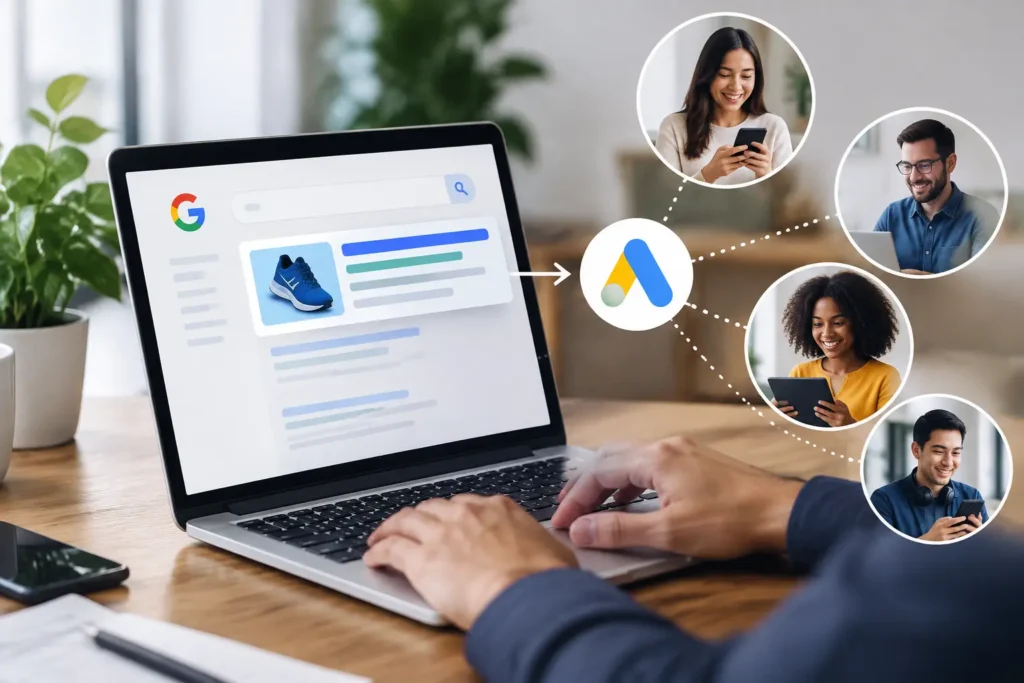
A single search can put thousands of ads in competition for the same customer. Google runs the auction in less than a second, and your bid is only one part of the decision.
Three stages follow one search from the first keystroke to the sale it produces. Each one decides whether your target audience ever sees you.
The Auction System That Sets Your Ad Rank and Cost Per Click
Google Ads uses bidding rather than fixed pricing. And every query opens a fresh auction among advertisers chasing the same customer.
Your maximum bid sets the most you’re willing to pay for a click, which helps control your Google Ads costs. Still, the highest spender rarely takes the top slot in Google search results. Because Google also considers ad quality, relevance, and landing page experience.
In fact, Google multiplies your bid by a quality rating to set your Ad Rank, and only ads that clear the minimum get shown (a sharper ad beats a fatter budget most days). This means a well-targeted ad can often compete with a larger budget.
Keyword Research and Targeting: Choosing Relevant Keywords for Real Intent
Keywords connect what people search for with the ads they see. The match type controls how closely a search needs to match your keyword, which makes keyword research a major part of setting up a campaign.
That choice affects how widely your ads can appear. Broad match can show your ad for related searches, such as “cheap door guards” when you target “door stoppers”. Exact match keeps searches closer to your keyword, while negative keywords prevent your ads from appearing for searches you don’t want.
Once you’ve chosen the right keywords, group closely related terms into focused ad groups. This keeps your ad copy relevant to each search (which is why we use the searcher’s own words where possible). You can then check the search terms report each Friday to catch wasted spend early.
Conversion Tracking From Clicks to Leads and Sales
After someone clicks your ad, the Google Ads conversion tracking tag records what they do next. It can show whether they call, submit a form, or leave the site. This gives you useful data about which clicks lead to action.
Linking Google Analytics adds more context. You can see which landing pages keep visitors engaged and which ones make them leave quickly.
Having run paid search advertising for trades and services across Brisbane and the Gold Coast, we trust conversion numbers far more than raw click counts. Clicks show interest, but conversions show whether your ads are delivering results.
Why Does Ad Quality Decide Who Sees Your Google Ads?
Ad quality decides who sees your ads because Google weighs ad relevance, expected clicks, and landing page experience together. These factors also contribute to your Quality Score, which ranges from 1 to 10 for each keyword.
Three signals feed that number, and each one pushes your costs in a different direction:
- Expected Click Rate: Google looks at past performance on similar keywords to estimate how likely people are to click your ad. A poor history can limit how often your ads appear before the auction even begins.
- Ad Relevance: Your ad should closely match the keyword and the search itself. When the headline reflects what someone searched for, Google sees the ad as more relevant. Generic headlines can weaken this signal.
- Landing Page Experience: The page visitors reach after clicking also affects your score. Slow loading, limited content, or a missing Privacy Policy can hurt the experience. Google checks whether the page meets the expectations set by your ad.
These signals affect the ad auction, but the promo itself has another tool that can encourage clicks. Ad extensions can add extra links and phone numbers, which give people more ways to respond and help improve click-through rates. Still, the landing page is often where campaigns waste the most money, so that’s the first place we’d check.
How PPC Advertising in Google Ads Puts Your Business in Front of Ready Buyers
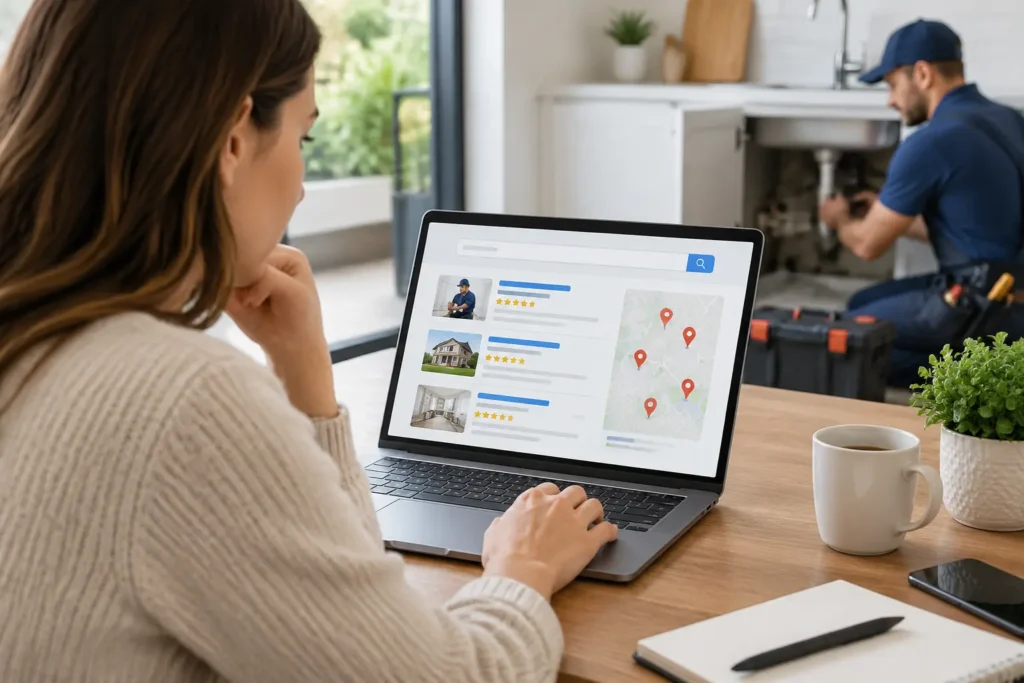
The main benefit of PPC advertising is reaching people when they’re ready to buy. Someone searching “emergency locksmith near me” at 9 pm is likely looking for help now, instead of casually browsing.
That buying intent sets paid search apart from social media advertising. Social ads appear while people are scrolling, so they may not be ready to act. With paid search, the person has already told Google what they need.
Google handles over 90% of the world’s search engine traffic, according to StatCounter. That gives businesses access to a large share of people actively searching for products and services.
Google Ads is especially useful for local trades such as plumbers and electricians. These businesses can often start seeing results within weeks rather than waiting months. The platform was called Google AdWords until 2018, and its focus on search intent has helped it remain a popular advertising channel.
The platform can also work with smaller budgets. You set a daily spending limit, and you pay when someone clicks your ad. We once saw a Brisbane workshop earn more from a first campaign with a $40 daily budget than it had from a year of print advertising.
That control continues after the campaign starts. You can adjust your budget, keywords, and landing pages based on the results. If your services page gets twice as many conversions as your home page, you can send more traffic there.
For businesses with limited budgets, that ability to act on the data can make Google Ads a practical choice.
Choosing Between Google Search Ads, Display, Video, and Shopping Campaigns
Now that you know how campaigns find buyers, here’s how the formats differ. Four options inside Google Ads cover almost every goal, so match the format to the job you need done.
| Format | Where ads appear | Best for |
|---|---|---|
| Google Search Ads | Search results and search network partners | Buyers ready to act now |
| Display Ads | Google Display Network sites | Staying visible after a visit |
| Video Ads | YouTube clips and Shorts | Showing how a product works |
| Shopping Ads | Google Shopping listings | Retailers with product feeds |
Tip: Start with search text ads while you learn which keywords and offers bring results. Once you know what works, use Display Ads to reach people who visited your site but didn’t take action. YouTube works well for products that need a demonstration, where a short video can explain more than a paragraph.
Put Search Intent to Work in Your Next Online Marketing and Google Ads Campaign
People tell Google what they need, and your ad can appear when they’re ready to act. Each campaign setting affects how closely your ad matches that search.
That’s why PPC works best with a focused approach. You can begin with one service, use the same words your customers search for, and track the results for two weeks. These small tests can show you what works before you increase your budget.
SlamStop builds and manages search campaigns for Australian businesses that want phone calls, rather than just impressions. Contact our team to reach people who are already searching for your services.